A few weeks ago, I stumbled into r/DefendingAIArt, a community of around 30,000 people posting memes and discussion about how A.I generated imagery is real art. The forum is lousy with bad, 1-dimensional arguments stripped of meaningful knowledge or context.
I can’t be bothered to address their arguments. I don’t debate fascists because inherently they believe in a different world view I find abhorrent, anti-human, and cruel, and to debate them implies there is legitimacy to their claim. I’m not calling these A.I defenders fascist (per se), only that based on my experience, there is no legitimacy to “A.I images are art,” ergo I don’t engage. On the off chance that someone comments on this post arguing in favor of “A.I images are art” – great job. You showed me. You win and your parents love you.
I don’t believe A.I generated imagery is or ever will be art.
But what is art? It is a tough question smarter people than me have done a much better job of defining. I’m still, however, somewhat of an expert given the circumstances, and most certainly when compared to A.I stans, thus I feel qualified. In my experience, the definition of art is:
observation + interpretation.
Observation.
An artist will observe the world around them. To observe something goes beyond looking at it. Marc Brunet goes on about this ad nauseum.
Let’s say you are looking at a tree. The bark is brown, the leaves are green.
But how do we observe? How many branches does this tree have? What are the shape of the leaves? What is the pattern of the bark? How tall is it in relation to its surrounding? What are the shapes of the shadows? Some might say that observation in this context is “advanced looking,” and to that I would say, “Yeah.”
Interpretation
Now let’s interpret our tree, which is to say, what part of this tree speaks to us the most? Is it the shape? The color? Location? Are you taken by the root system at the base? Does the wind upturn the leaves in a fashion that holds your interest?
Then there is the selection of mediums. Paint? Graphite? Ink? Digital? Photography? Poetry? How do you want to interpret this beautiful tree?
Then there are the numerous techniques within each medium.
And then there is the dexterity in which one can execute those techniques.
And then there are the happy accidents.
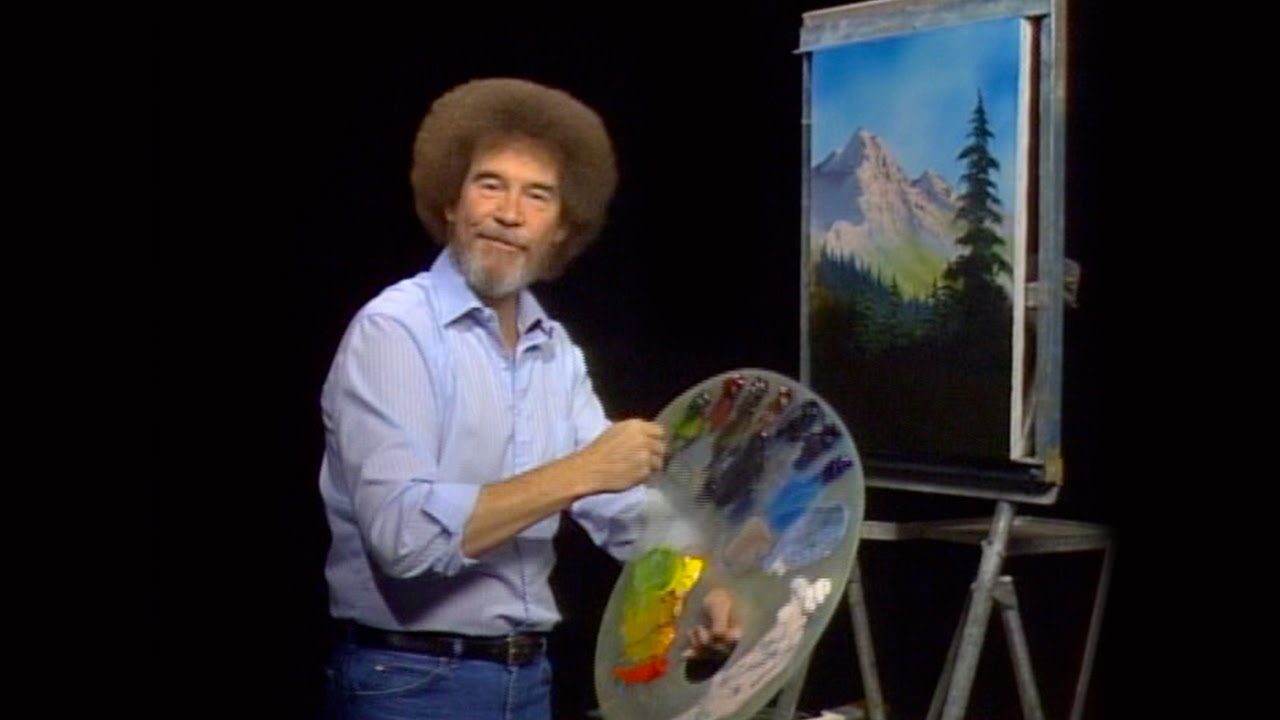
Artists make thousands of mistakes in the process of making things, and any number of those can wind their way into the weave, both knowingly and unknowingly, to a final composition. Based on my experience as both an artist and art lover, these ultimately contribute to the warmth and aliveness we associate with art and the practice there of. These are things that can’t be measured, because they are subjective and they must be experienced.
And there is risk in creating art. One sacrifices time in creating things. How much time would you work on anything if you knew there was a chance you would hate it? Or if you knew people were going to critique it? Or if there was a chance you wouldn’t be monetarily rewarded for the completed work (you know, 99% of all art ever made)? A.I. generated imagery (or anything) effectively removes this risk, as you can keep hitting the refresh button until you find something you like.
There are thousands of little changes one can make based on this concept, and every person will do it different. I’m not going to blog forever about each little thing (although I will clarify that putting different prompts into the machine is not the same thing so don’t “um, actually” me).
BUT here we come to the crux of my argument. An “A.I Artist” doesn’t make an observation or interpret that observation. An “A.I Artist” says, “I like thing. Computer, make my idea look like thing I like.” And the computer will reproduce the thing with the specifications provided to varying degrees of success. They may like a certain color, but they don’t understand the context from which the color was chosen and thus can’t apply it in any meaningful way. A line quality may speak to them, but without subjective experience, they can’t interpret the line, and it becomes hollow.
Plot Twist
I’m not trying to change minds. What I’m saying to any A.I defenders is: I get it.
I’m exhausted laying out these rickety explanations, let alone actually drawing anything. If you want an image, it’s so much easier to have a machine do it for you. I want to sit comfortably, but I don’t want to learn carpentry, so I buy a chair. But just because I spend hours shopping for the right chair, and several hours more assembling the chair doesn’t make that chair a craft nor does it make me a carpenter.
“A.I Artist” are consumers, and that’s fine. The arguments attempting to legitimize the products made by A.I are all bad and wrong, but
you don’t need a good argument. Just say you want the thing.
I strongly believe this second industrial revolution is a net loss for humanity in the same way that the first one was. There are countless amazing things that come from automation, but it’s not applied with any amount of consideration beyond what makes certain people the most amount of money. Thus we see fewer master crafts folk. Fewer tailors, cobblers, carpenters, mason workers, and so on. In the same vein, with the A.I generated goods, we’re going to see fewer artists of all disciplines.
And I think that’s sad.
 Art as a Mental Illness
Leave a comment